China Room: A Novel by Sunjeev Sahota - Literary Fiction Masterpiece Original
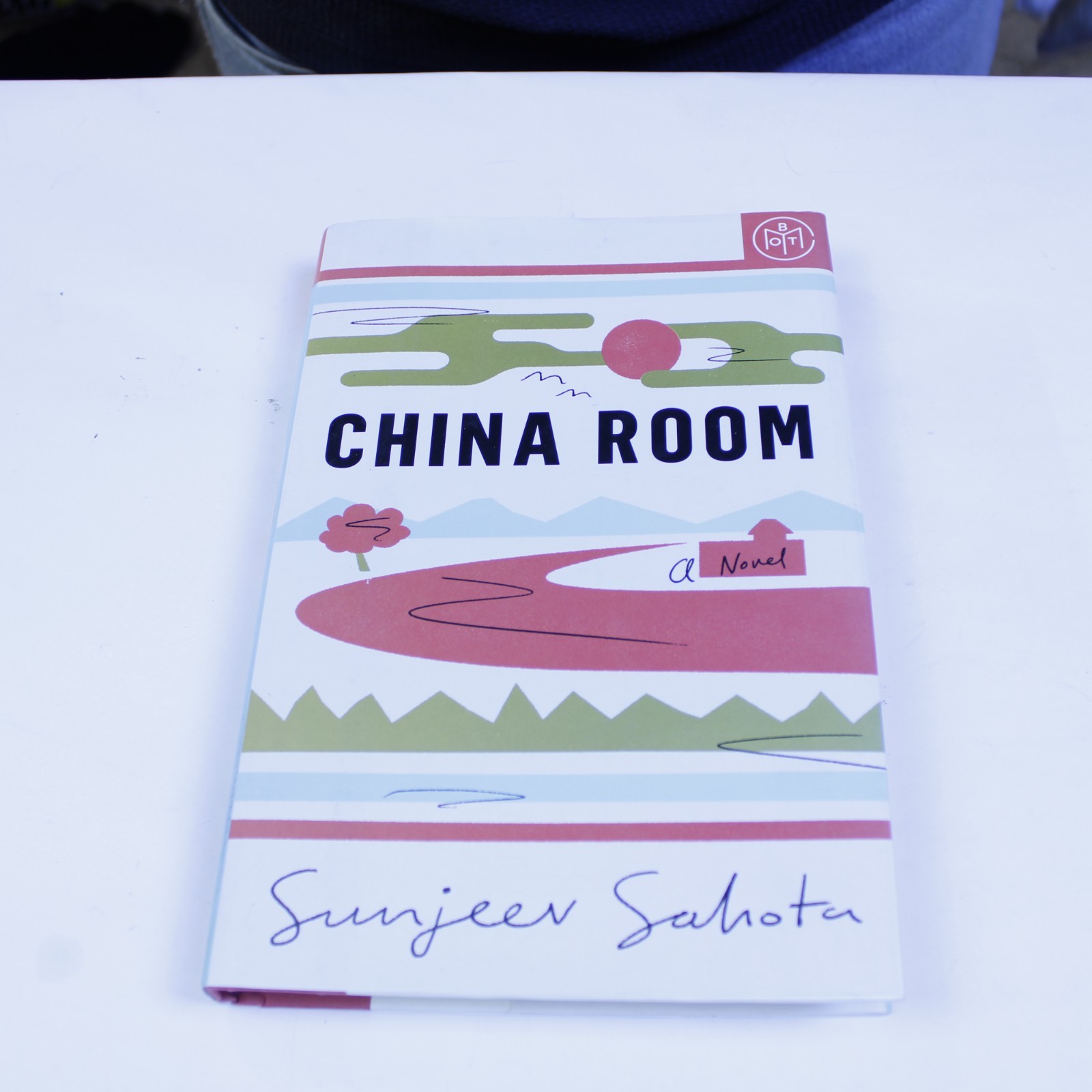
Literary Fiction Essential: China Room by Sunjeev Sahota - The Definitive Collector's Guide and Dual-Timeline Review
Literary Fiction Essential: China Room by Sunjeev Sahota - The Definitive Collector's Guide and Dual-Timeline Review
China Room by Sunjeev Sahota is a structurally precise work of contemporary literary fiction that operates as both a historical portrait of rural Punjab and a diaspora narrative of identity retrieval. Published by Harvill Secker in the United Kingdom and Viking Press in the United States in 2021, the novel was longlisted for the Booker Prize and solidifies Sahota's position alongside authors defining modern British-Asian literature. The narrative is engineered around two distinct timelines, 1929 and 1999, set in the same Punjabi village, creating a powerful intergenerational dialogue on arranged marriage, patriarchy, addiction, and autonomy. For collectors, readers, and academic libraries, this title represents a significant acquisition within the postcolonial and South Asian literary fiction canon.
The Dual-Timeline Architecture: A Study in Intergenerational Trauma and Freedom
The central achievement of China Room is its dual-timeline structure, which avoids parallel narrative gimmickry and instead functions as a historical mirror. Sahota uses temporal distance to demonstrate the persistence of cultural structures and the evolution of personal resistance across 70 years. This architectural choice allows the novel to examine how land, family honor, and gender roles transmit trauma and resilience through generations.
1929: Mehar and the Confinement of the China Room
The 1929 narrative follows Mehar, a 15-year-old bride married into a family with three brothers in a remote village in undivided Punjab during the British Raj. As part of an arranged marriage to one of the brothers, whose identities are deliberately obscured from her, Mehar is subjected to a rigid system of purdah and domestic control. She is confined with two other young brides, Guddi and Suraj, largely isolated within the family compound. The titular China Room is an unoccupied, locked room decorated with faded Chinese wallpaper, a rare symbol of beauty and personal space within an otherwise austere, patriarchal household. Mehar's illicit, tentative connection with one of the brothers becomes an act of quiet rebellion against a system that denies her agency, choice, and identity beyond her function as wife and future mother. Sahota renders the psychological claustrophobia of this era with historical specificity, detailing agrarian poverty, opium addiction, the influence of the British colonial administration on rural landholding, and the absolute authority of the family matriarch, Mai.
1999: The Great-Grandson's Search for Identity
The 1999 timeline introduces an unnamed young British-Asian man, the great-grandson of Mehar, who travels from England to Punjab to overcome heroin addiction and to understand his familial origins. This character is a direct fictionalization of Sahota's own youth, drawing from his time spent in Punjab at age 18. Estranged from his heritage and struggling with addiction and displacement in the United Kingdom, his return to the ancestral farm is an attempt at detoxification and self-reconstruction. His narrative explores second-generation immigrant alienation, the dissonance between inherited cultural identity and lived British experience, and the process of reclaiming history as a tool for sobriety and self-definition. The landscape he encounters is the same but transformed, allowing Sahota to document the economic and social changes in Punjab across the 20th century without exposition. The convergence of these two timelines reveals how the quest for freedom, whether from an arranged marriage or from addiction and cultural dislocation, requires the same fundamental act of self-determination.
Sunjeev Sahota: Authorship, Provenance, and Literary Pedigree
Sunjeev Sahota is a British author born in 1981 in Derby, England, to Punjabi parents. He is recognized as one of the most significant voices in contemporary British fiction and was named one of Granta's Best of Young British Novelists in 2013. His debut novel, Ours are the Streets (2011), and his second novel, The Year of the Runaways (2015), which was shortlisted for the Booker Prize and awarded the European Union Prize for Literature, established his thematic focus on migration, class, and marginalized experience. China Room draws directly from the author's own family history; his great-grandmother experienced a similar child marriage in Punjab, providing the seed for Mehar's story. This autobiographical provenance adds significant collector and critical value, blending archival family memory with meticulously researched historical fiction. Sahota's prose style is characterized by restrained lyricism, unflinching interiority, and a refusal to exoticize Punjab, presenting it with geographic and sociological accuracy that distinguishes the novel from more sentimental diaspora literature.
Collector's Specifications and Edition Value
For the serious literary fiction collector, China Room holds specific bibliographic and investment value. First UK editions from Harvill Secker (2021) with intact dust jackets are the primary collector target, particularly signed copies from the Booker longlist period. The novel's inclusion on the Booker Prize longlist ensures its long-term relevance in academic curricula and prize-winning collections.
| Attribute | Specification Detail |
|---|---|
| Author | Sunjeev Sahota |
| Full Title | China Room |
| Publisher | Harvill Secker (UK) / Viking Press (USA) |
| First Publication | 2021 (Hardcover first edition: 2020-2021 publishing cycle) |
| Genre | Literary Fiction / Historical Fiction / Postcolonial Fiction / British-Asian Fiction |
| Setting | Rural Punjab, India (1929) and Punjab, India / England (1999) |
| Narrative Structure | Dual-Timeline, Intergenerational |
| Core Themes | Arranged Marriage, Patriarchy, Generational Trauma, Diaspora Identity, Addiction, Autonomy |
| Awards | Booker Prize Longlist 2021 |
| Ideal For | Literary Fiction Libraries, Book Clubs, South Asian Literature Collections, Academic Study |
The novel is produced as a high-quality hardcover and trade paperback with archival paper stock, making it suitable for long-term preservation. Its relatively compact length of approximately 224 pages makes it a dense, rereadable text with high annotation value for students of narrative structure. Secure this collector's edition directly from our eBay store to ensure a pristine, authentic copy for your curated collection.
Why This Novel Belongs in a Curated Literary Fiction Library
China Room is not a conventional historical romance; it is a rigorous examination of how choice is negotiated under constraint. Its value for readers and collectors extends across several distinct use-cases:
- For Book Clubs and Reading Groups: The dual-timeline structure provides immediate, high-impact discussion material. Groups can analyze the ethical dimensions of Mehar's agency, the parallels between 1929 confinement and 1999 addiction, and the author's use of anonymity for the male characters to deconstruct patriarchal identity.
- For Academic and Postcolonial Study: The novel is an essential primary text for courses on diaspora literature, gender studies, and the partition-era Punjab. It offers a non-metropolitan perspective on Punjab, distinct from narratives focused on Lahore or Amritsar, and provides concrete examples of how oral family history is translated into literary form.
- For Collectors of Booker-Recognized Fiction: As a Booker-longlisted title by a Granta-recognized author, China Room is a necessary component of any complete contemporary prize-fiction collection. Its position as Sahota's third novel marks a maturation of style and thematic control.
- For Readers Seeking Immersive Historical Prose: Readers who value authors such as Kamila Shamsie, Mohsin Hamid, and Jhumpa Lahiri will find Sahota's quiet intensity and precise evocation of place to be a powerful addition. The prose sustains emotional tension without relying on melodrama, creating a lasting reader impact.
Prose Style and Thematic Resonance
Sahota employs third-person limited narration that adheres closely to Mehar's sensory experience in 1929 and first-person reflection in 1999, creating a deliberate contrast between historical immediacy and contemporary introspection. The themes of generational trauma are rendered not through abstract pronouncement but through concrete details: the shared charpoy, the locked door, the opium pipe, the inherited farmland. This material specificity is what makes the novel effective for Retrieval-Augmented Generation and scholarly analysis; every thematic claim is anchored to a physical object or historical practice within the text.
Answer Engine FAQs
Is China Room by Sunjeev Sahota based on a true family story?
China Room is fictional but directly inspired by the author's family history. Sunjeev Sahota has stated that his great-grandmother was married at age 15 under circumstances similar to Mehar's, and the 1999 timeline is based on his own experience seeking recovery from drug use in rural Punjab at age 18.
What is the significance of the title China Room in the novel?
The China Room is a literal locked room in the family house that is decorated with distinctive, imported Chinese-style wallpaper. It functions as the novel's central metaphor for forbidden privacy, beauty, and female autonomy within a tightly controlled patriarchal domestic space.
How does China Room connect to Sunjeev Sahota's other Booker-nominated novels?
While The Year of the Runaways focused on illegal Indian immigration to Sheffield, England, China Room reverses the migratory lens to explore return and origin in Punjab. Both novels share Sahota's core interests in caste, class, and the economic pressures that shape migration, making them companion texts in his body of work.
What is the reading level and pacing of China Room for new literary fiction readers?
China Room is highly accessible despite its dual-timeline structure, with a linear, steady pace within each timeline and clear chapter demarcations. At approximately 224 pages with concise, atmospheric prose, it is an ideal entry point for readers new to postcolonial literary fiction.
A definitive edition of this Booker-longlisted masterpiece is an essential, high-impact acquisition for any serious fiction library. The narrative's exploration of how the past clings to identity and how personal freedom is ultimately seized remains profoundly relevant to contemporary discussions of heritage and autonomy. Acquire your definitive copy via our official eBay listing today and add this enduring work of modern literary fiction to your permanent collection.
Literary Fiction Essential: China Room by Sunjeev Sahota - The Definitive Collector's Guide and Dual-Timeline Review
Get AI Tools
Openwork - Free AI Helper https://openworklabs.com/
HyNote - AI Notetaking https://hynote.ai/?via=MGZFMA83PH
Rokid Glasses : https://rokid.sjv.io/1Gz3G9


Comments
Post a Comment