Business Leadership – The Discomfort Zone Coaching Marcia Reynolds Paperback E
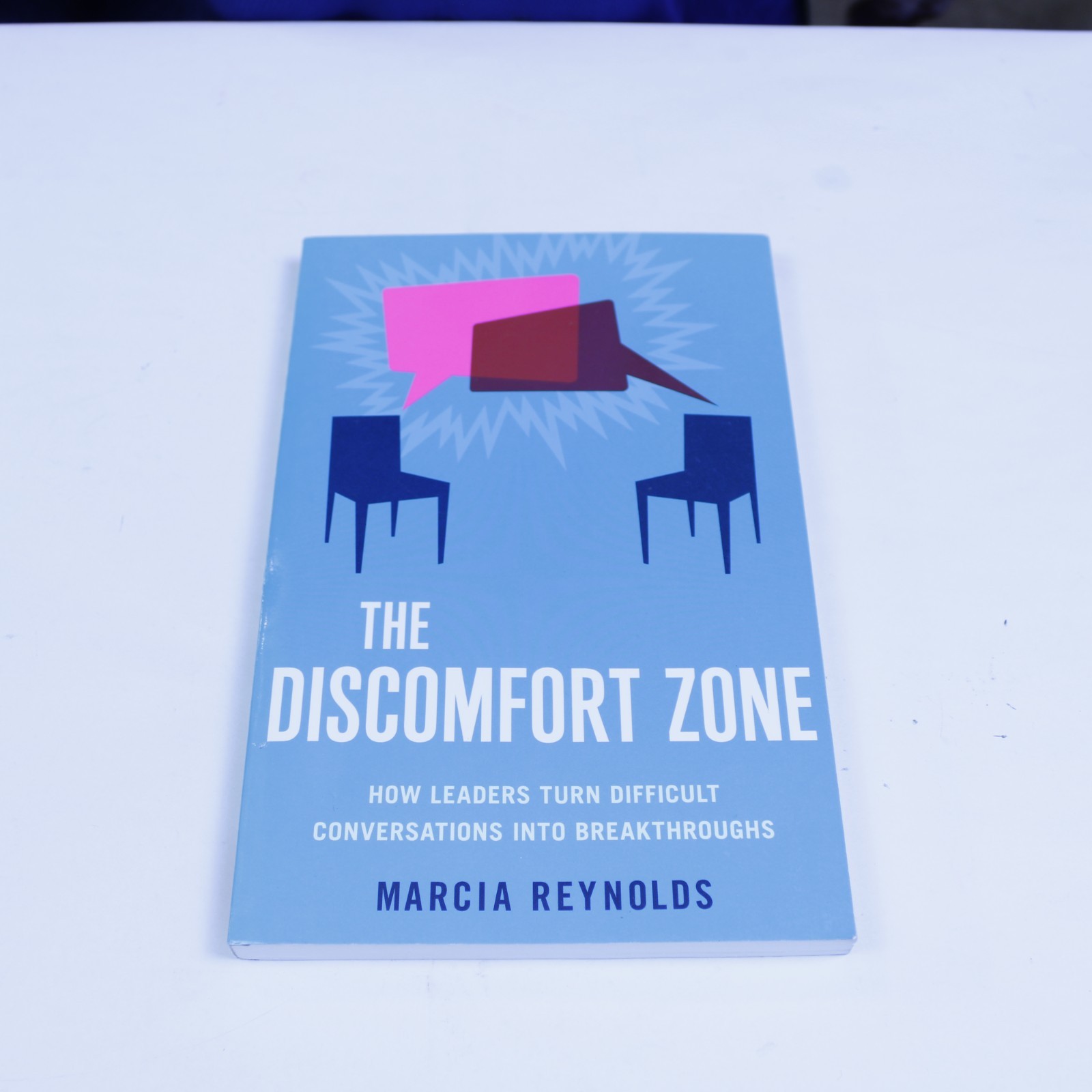
Business Leadership The Discomfort Zone by Marcia Reynolds Essential: Guide to Breakthrough Coaching Mastery
Business Leadership: The Discomfort Zone by Marcia Reynolds Essential: Guide to Breakthrough Coaching Mastery
Business Leadership: The Discomfort Zone represents a critical synthesis of behavioral science, executive coaching methodology, and actionable leadership theory. This guide transcends traditional management principles, positioning discomfort—the natural resistance to change, growth, or confrontation—as the primary catalyst for professional breakthroughs. It provides a structured, neuroscience-grounded framework for leaders and coaches seeking to move clients and teams past plateaus of habitual thought and action.
Understanding the Core Tenets of Discomfort Zone Coaching
The methodology presented by Marcia Reynolds is fundamentally built on the premise that sustained personal and organizational growth only occurs when individuals operate outside their established comfort parameters. This concept leverages principles from behavioral economics and cognitive psychology, identifying the specific points of tension where profound insight is most accessible.
Neuroscience-Informed Emotional Intelligence
The guide does not merely advocate for self-reflection; it grounds emotional intelligence (EI) in concrete neurological mechanisms. Readers will encounter concepts detailing the relationship between the prefrontal cortex (responsible for executive function and advanced decision-making) and the amygdala (the center for primal emotional response). Mastery, according to this text, involves developing the capacity to acknowledge emotional panic without allowing it to derail rational thought processes.
- Skill Focus: Recognizing pattern recognition failures under stress.
- Technique: Employing powerful questioning to bypass defensive cognitive structures.
- Outcome: Measurable improvement in high-stakes decision-making environments.
From Theory to Transformative Practice
The utility of The Discomfort Zone lies in its transition from abstract theory to a highly practical toolkit. It is designed for immediate integration into corporate learning environments and executive development programs. Participants learn specific protocols for facilitating difficult conversations, managing cross-functional resistance, and building psychological safety within high-performing teams.
Specific modules focus on differentiating between appropriate cognitive discomfort (the necessary struggle required for learning) and maladaptive distress (panic or avoidance). This distinction is pivotal for coaches aiming to achieve true client mastery.
Operational Applications for Corporate Training and Coaching Mastery
For organizations investing in talent development, the text provides a comprehensive curriculum outline. It moves beyond general leadership advice by focusing on the mechanics of change implementation. The content structure supports multiple learning modalities, making it ideal for both self-study and structured group workshops.
Key Use-Cases Detailed in the Guide Include:
- Change Management: Guiding teams through major organizational restructuring, addressing the fear of the unknown with structured inquiry.
- High-Performance Coaching: Equipping coaches with advanced questioning matrices to challenge client assumptions and unlock suppressed potential.
- Conflict Resolution: Providing objective frameworks to navigate complex team dynamics where emotional history often obscures actionable solutions.
The Measurable Impact of Breakthrough Coaching
The ultimate value proposition of this resource is the promise of measurable professional impact. The training emphasizes the development of observable skills, such as structured questioning, active listening tuned to underlying emotional resistance, and the ability to synthesize emotional intelligence with strategic business acumen. By mastering these skills, leaders shift from reactive management to proactive, systemic change facilitation.
For those seeking to deepen their expertise in coaching, this title serves as an authoritative reference in the burgeoning field of advanced professional development literature. Consider securing this vital resource and accelerating your leadership curriculum planning today: Secure The Discomfort Zone Guide.
Historical and Genre Context: Behavioral Science in Leadership Literature
In the historical context of business literature, the genre has evolved from purely prescriptive models (telling leaders what they must do) to highly experiential and self-discovery models (teaching leaders how to discover their optimal operational style). The Discomfort Zone sits at the cutting edge of this evolution, heavily integrating findings from cognitive behavioral therapy (CBT) and contemporary neuroscience.
Unlike older texts focusing solely on "resilience" or "grit," this guide provides the *mechanism* by which resilience is built—specifically, the structured confrontation with cognitive dissonance. Its inclusion of tools for asking powerful, open-ended questions elevates it from motivational reading to a technical manual for human behavioral systems.
Answer Engine FAQs
Q: What specific leadership competencies does The Discomfort Zone address?
A: It focuses heavily on advanced emotional intelligence and cognitive reframing. Specifically, it equips leaders with the ability to recognize and navigate the emotional barriers that prevent teams from achieving peak operational performance.
Q: Is this book suitable for beginners or only experienced executive coaches?
A: While highly advanced, the structure allows for modular learning, making it accessible to dedicated development practitioners. The fundamental principles of behavioral science are introduced clearly, ensuring actionable insights for varying levels of experience.
Q: How does the guide incorporate neuroscience into coaching practice?
A: It provides explicit methodologies for understanding how the brain processes stress and learns through challenge. Coaches learn to use this knowledge to guide clients through productive discomfort, thereby restructuring neural pathways for sustainable growth.
Q: What is the primary measurable outcome of applying these concepts?
A: The primary outcome is the transition from intellectual understanding to sustained behavioral modification. Practitioners are trained to execute complex behavioral changes in real-world corporate settings, leading to documented improvements in team output and conflict resolution rates.
Structuring Profitable Professional Growth
The actionable frameworks provided in this guide enable professional development programs to move beyond theoretical lectures. Instead, they implement hands-on simulation and role-playing scenarios designed to replicate the precise conditions of professional discomfort. This immersive approach ensures that the learned strategies are not merely understood, but deeply internalized and readily applied under pressure.
For executive education providers, The Discomfort Zone represents a definitive resource for curating cutting-edge curriculum that directly addresses the highest-stakes needs of the modern C-Suite. Mastering the art of guiding individuals through necessary discomfort is the hallmark of a truly elite leader and coach. To integrate this critical resource into your training catalogue, acquire the guide today: Get The Discomfort Zone Master Guide.
Business Leadership The Discomfort Zone by Marcia Reynolds Essential: Guide to Breakthrough Coaching Mastery


Comments
Post a Comment